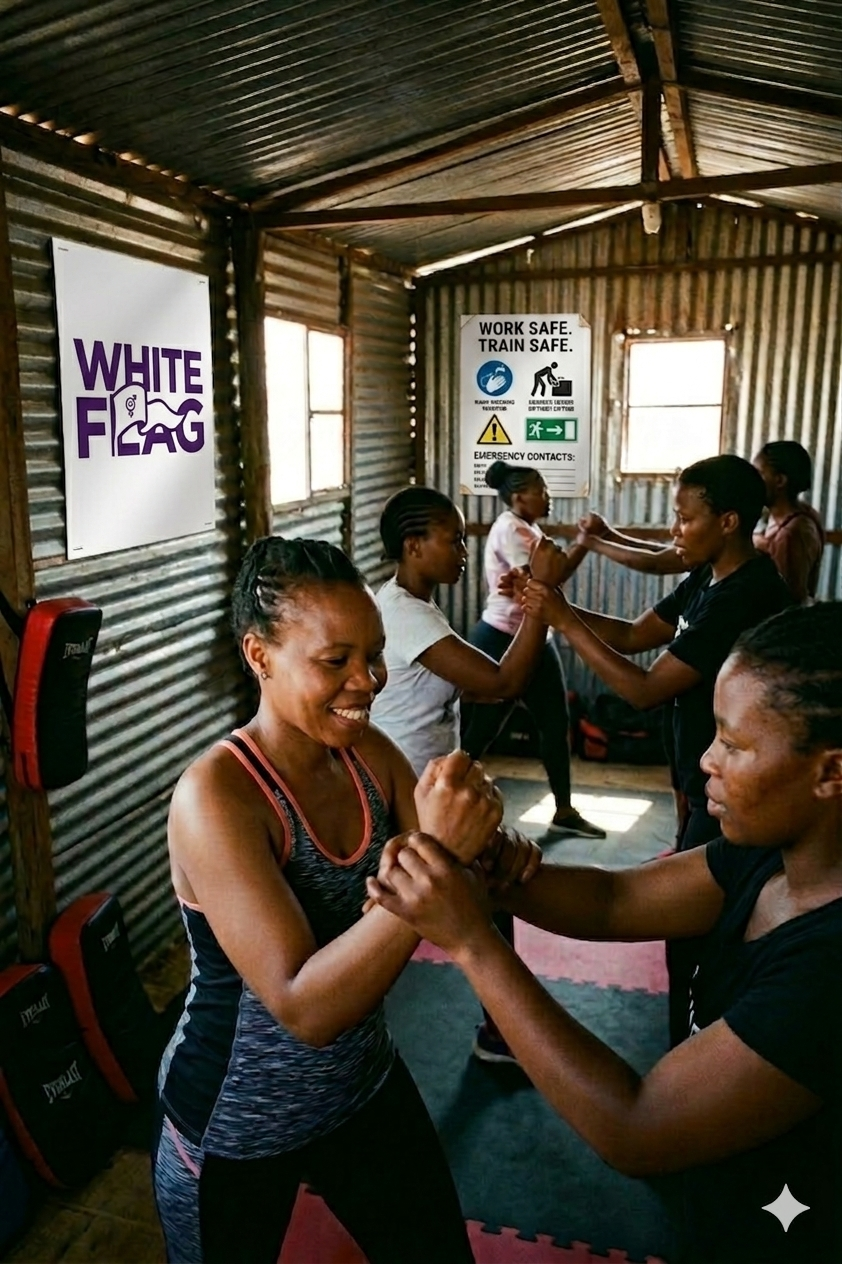
Beyond physical techniques, self-defence equips individuals with awareness, confidence, and the ability to assess and respond to risk. It shifts women and girls from a position of vulnerability to one of preparedness, enabling them to recognise danger early, assert boundaries, and act decisively to preserve their safety.
Importantly, self-defence is not about placing responsibility on potential victims, but about providing practical tools that can interrupt violence in real time while broader societal change continues to unfold. The White Flag programme recognises that ending violence requires both systemic transformation and immediate, life-preserving interventions. As such, it incorporates the provision of self-defence and life preservation skills through structured, interactive workshops delivered in schools and across communities.
These workshops are designed to be accessible, culturally relevant, and practical, ensuring that participants can apply what they learn in real-world situations. Key components of the workshops include rape avoidance training, self-defence techniques, and strategies for safe-proofing the home. Participants are also equipped with street-smart skills, including situational awareness and safe dating practices, enabling them to navigate both public and private spaces with greater confidence and security.
To ensure wide reach and sustained impact, these skills are further amplified through social networking platforms, cellular messaging, dedicated websites, and traditional media channels such as radio, television, and print.
This multi-platform approach ensures that knowledge is continuously reinforced and accessible beyond the workshop environment.
By combining education, practical skills, and broad-based dissemination, the White Flag programme empowers women and girls with the tools to protect themselves, while fostering a culture of vigilance, care, and collective responsibility within communities.