For many women—especially in underserved and rural communities—abuse is endured not out of choice, but necessity. Economic dependency becomes a tool of control, reinforcing cycles of silence, fear, and entrapment.
Children raised in these environments are profoundly affected. Exposure to abuse normalises violence, increasing the likelihood that they either become victims or perpetrators later in life. Many experience emotional trauma, anxiety, poor academic performance, and long-term psychological harm. In some cases, children are directly abused—physically, emotionally, or sexually—within these unstable households. This creates an intergenerational cycle of violence, where harm is inherited and perpetuated, eroding the social fabric of communities.
Girl children raised in such contexts face particularly heightened vulnerability. Growing up in environments where abuse is normalised weakens protective boundaries and increases exposure to predatory behaviour. These girls are significantly more likely to be targeted by sexual predators through grooming, coercion, and statutory rape. In many cases, poverty and instability increase their exposure to unsafe spaces and individuals, while limiting access to protection and support systems. This vulnerability is strongly linked to higher rates of teenage pregnancy—often not by choice, but as a result of coercion, manipulation, or abuse—thereby reinforcing cycles of gender inequality, trauma, and economic dependence across generations.
The broader societal impact of gender-based violence (GBV) is severe. It places strain on healthcare, social services, and the justice system, while reducing economic productivity and community stability. GBV undermines national development, weakens family structures, and perpetuates inequality, making it not only a social crisis but an economic one.
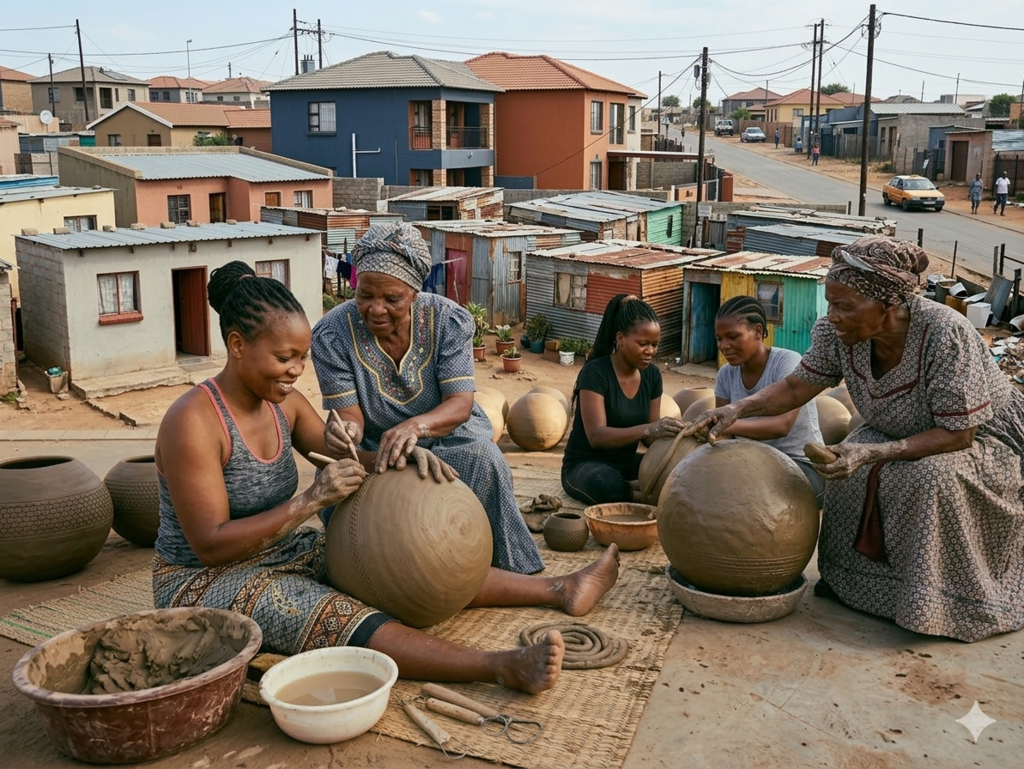
iSIBA (Indigenous Knowledge Systems Business Accelerator) offers a transformative solution by addressing the root cause: economic disempowerment. Through skills development, mentorship, and enterprise support grounded in Indigenous Knowledge, iSIBA enables women to build sustainable livelihoods in sectors such as natural medicine, cosmetics, and wellness. By fostering financial independence, women gain the agency to leave abusive environments safely. Simultaneously, iSIBA restores dignity, protects cultural knowledge, and builds resilient local economies—breaking cycles of violence and creating pathways for healing, empowerment, and generational change.
Importantly, iSIBA is designed to be financially sustainable. The programme generates revenue by partnering with the private sector—particularly the retail sector—to provide direct market access for products developed by its participants. Through offtake agreements, co-branding opportunities, and integration into formal retail value chains, iSIBA ensures that women-led enterprises move beyond subsistence into scalable, income-generating businesses. A portion of this commercial activity sustains the accelerator itself, reducing reliance on donor funding while strengthening long-term impact, ownership, and economic resilience.
For many women—especially in underserved and rural communities—abuse is endured not out of choice, but necessity. Economic dependency becomes a tool of control, reinforcing cycles of silence, fear, and entrapment.
Children raised in these environments are profoundly affected. Exposure to abuse normalises violence, increasing the likelihood that they either become victims or perpetrators later in life. Many experience emotional trauma, anxiety, poor academic performance, and long-term psychological harm. In some cases, children are directly abused—physically, emotionally, or sexually—within these unstable households. This creates an intergenerational cycle of violence, where harm is inherited and perpetuated, eroding the social fabric of communities.
Girl children raised in such contexts face particularly heightened vulnerability. Growing up in environments where abuse is normalised weakens protective boundaries and increases exposure to predatory behaviour. These girls are significantly more likely to be targeted by sexual predators through grooming, coercion, and statutory rape. In many cases, poverty and instability increase their exposure to unsafe spaces and individuals, while limiting access to protection and support systems. This vulnerability is strongly linked to higher rates of teenage pregnancy—often not by choice, but as a result of coercion, manipulation, or abuse—thereby reinforcing cycles of gender inequality, trauma, and economic dependence across generations.
The broader societal impact of gender-based violence (GBV) is severe. It places strain on healthcare, social services, and the justice system, while reducing economic productivity and community stability. GBV undermines national development, weakens family structures, and perpetuates inequality, making it not only a social crisis but an economic one.
iSIBA (Indigenous Knowledge Systems Business Accelerator) offers a transformative solution by addressing the root cause: economic disempowerment. Through skills development, mentorship, and enterprise support grounded in Indigenous Knowledge, iSIBA enables women to build sustainable livelihoods in sectors such as natural medicine, cosmetics, and wellness. By fostering financial independence, women gain the agency to leave abusive environments safely. Simultaneously, iSIBA restores dignity, protects cultural knowledge, and builds resilient local economies—breaking cycles of violence and creating pathways for healing, empowerment, and generational change.
Importantly, iSIBA is designed to be financially sustainable. The programme generates revenue by partnering with the private sector—particularly the retail sector—to provide direct market access for products developed by its participants. Through offtake agreements, co-branding opportunities, and integration into formal retail value chains, iSIBA ensures that women-led enterprises move beyond subsistence into scalable, income-generating businesses. A portion of this commercial activity sustains the accelerator itself, reducing reliance on donor funding while strengthening long-term impact, ownership, and economic resilience.
Teenage pregnancy in this context is not simply a health or moral issue—it is a child protection and justice issue. The Red Flag SA Campaign recognises that when a child falls pregnant, it signals a potential crime that requires intervention. Our campaign confronts the systemic drivers of exploitation by addressing poverty, power imbalances, and weak reporting mechanisms that allow abuse to continue unchecked.
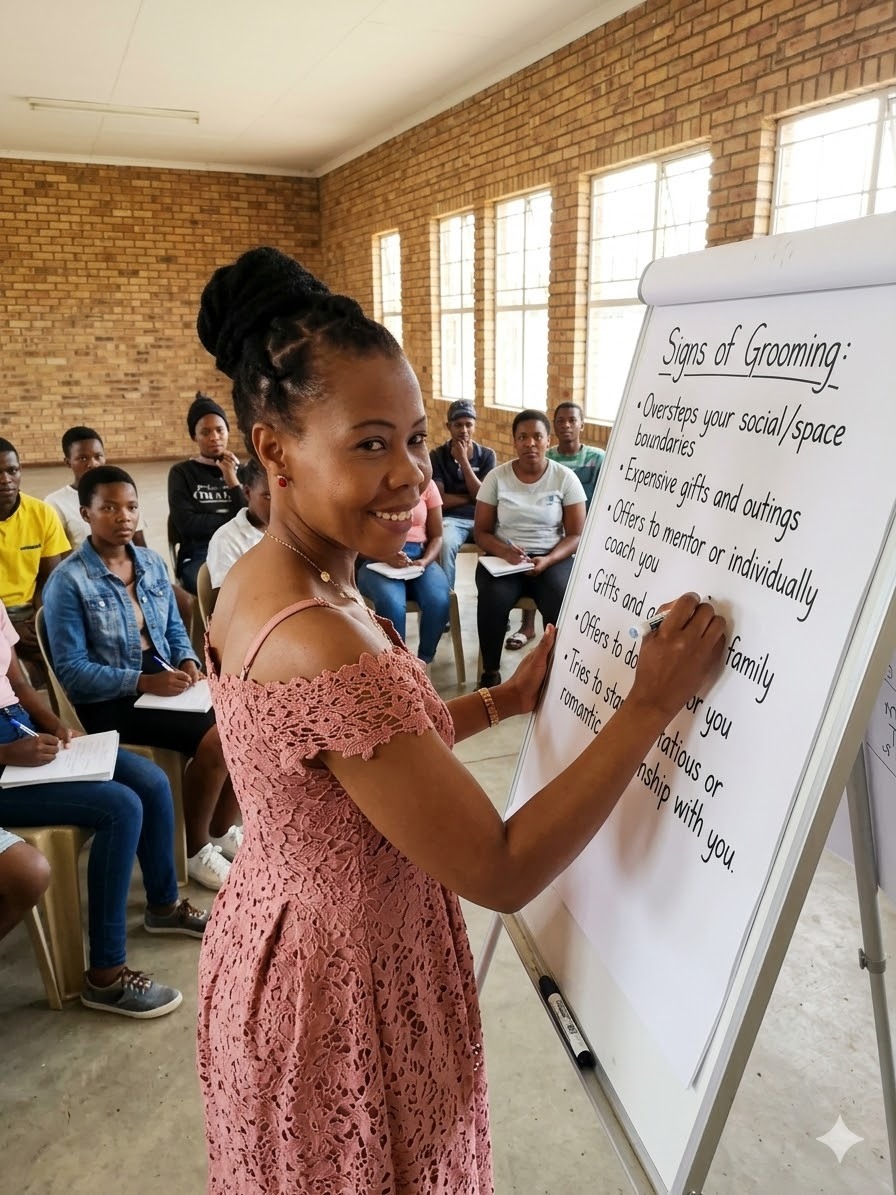
The campaign adopts a prevention-led, community-based approach. Through school talks, we educate girls and boys about grooming, consent, coercion, and the legal consequences of statutory rape. Parent workshops strengthen awareness of warning signs, while Girl Support Clubs provide safe spaces, mentorship, financial literacy training, and peer solidarity.
By equipping girls with economic resilience skills and access to support networks, we reduce vulnerability to transactional relationships driven by poverty. Community dialogues, faith leaders, traditional authorities, and local organisations are mobilised to publicly reject exploitation and to create protective environments for young girls.
In addition to community action, the campaign calls for structural reform. We will lobby government to make teenage pregnancies involving minors a notifiable incident within the healthcare system, requiring mandatory reporting and coordinated investigation. Integration between Health, Education, Social Development, and law enforcement is critical to accountability. Community organisations, women’s groups, youth movements, and legal advocates will form a referral and monitoring network to ensure follow-through.
Our message is clear: every pregnancy of a minor is a red flag. Protecting girls requires economic empowerment, community vigilance, and decisive government action.
The Green Doors programme focuses on prevention, de-escalation, and survival rather than confrontation. Through structured workshops, women learn situational awareness, how to recognise patterns of escalating violence, and how to create safe opportunities to exit dangerous situations. The campaign promotes preparedness without fear, strengthening women’s confidence and decision-making capacity while ensuring all training is trauma-informed, ethical, and rooted in dignity, safety, and community-based support systems.
The initiative includes guided home safety planning to help women identify safe rooms, map exit routes, create emergency code words, and prepare discreet grab-bags with essential documents and supplies. Caregivers are supported to develop age-appropriate child protection plans, including evacuation drills, memorising emergency contacts, and identifying trusted neighbours. Participants complete a personalised Safety Plan Workbook that strengthens readiness while prioritising calm, practical preparation. Training also covers how everyday items can be used strategically to create brief opportunities to escape harm, always emphasising withdrawal and protection rather than retaliation or engagement in violence.
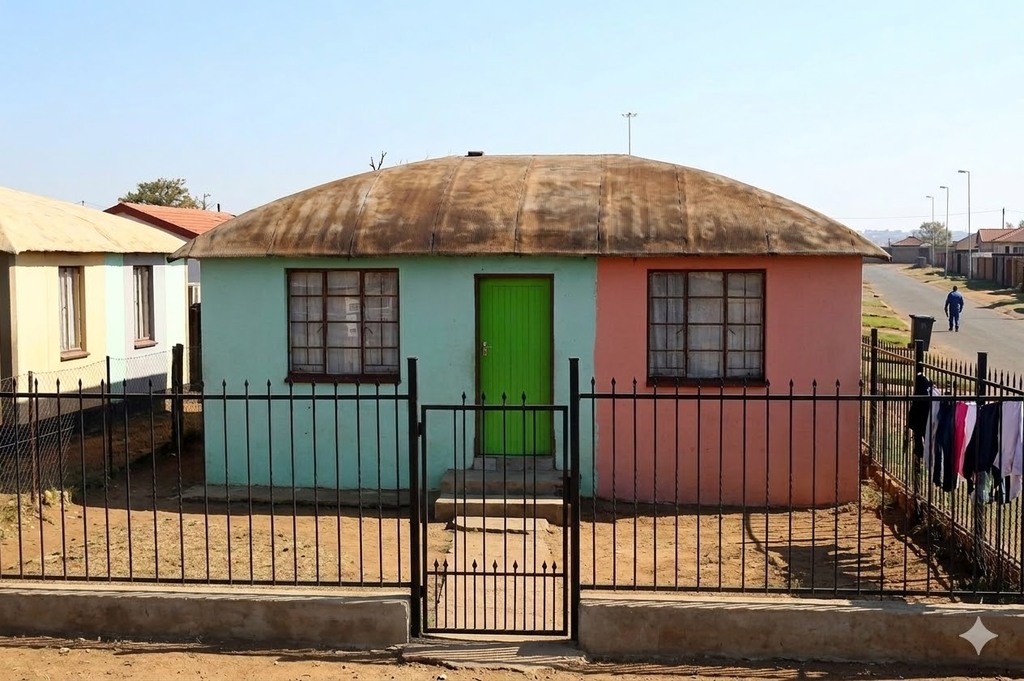
A core component of the campaign is the establishment of a discreet network of community-based safe spaces known as “Green Doors.” These vetted safe houses, hosted by trusted homes, faith institutions, or partner organisations, provide temporary refuge and referral pathways to legal, psychosocial, and social support services. Access is confidential and survivor-centred. By combining personal preparedness, child protection planning, and accessible safe spaces, the Green Doors Initiative addresses both immediate safety needs and broader GBVF prevention efforts, strengthening community solidarity while restoring women’s agency, protection, and pathways toward long-term security and resilience.
Beyond physical techniques, self-defence equips individuals with awareness, confidence, and the ability to assess and respond to risk. It shifts women and girls from a position of vulnerability to one of preparedness, enabling them to recognise danger early, assert boundaries, and act decisively to preserve their safety.
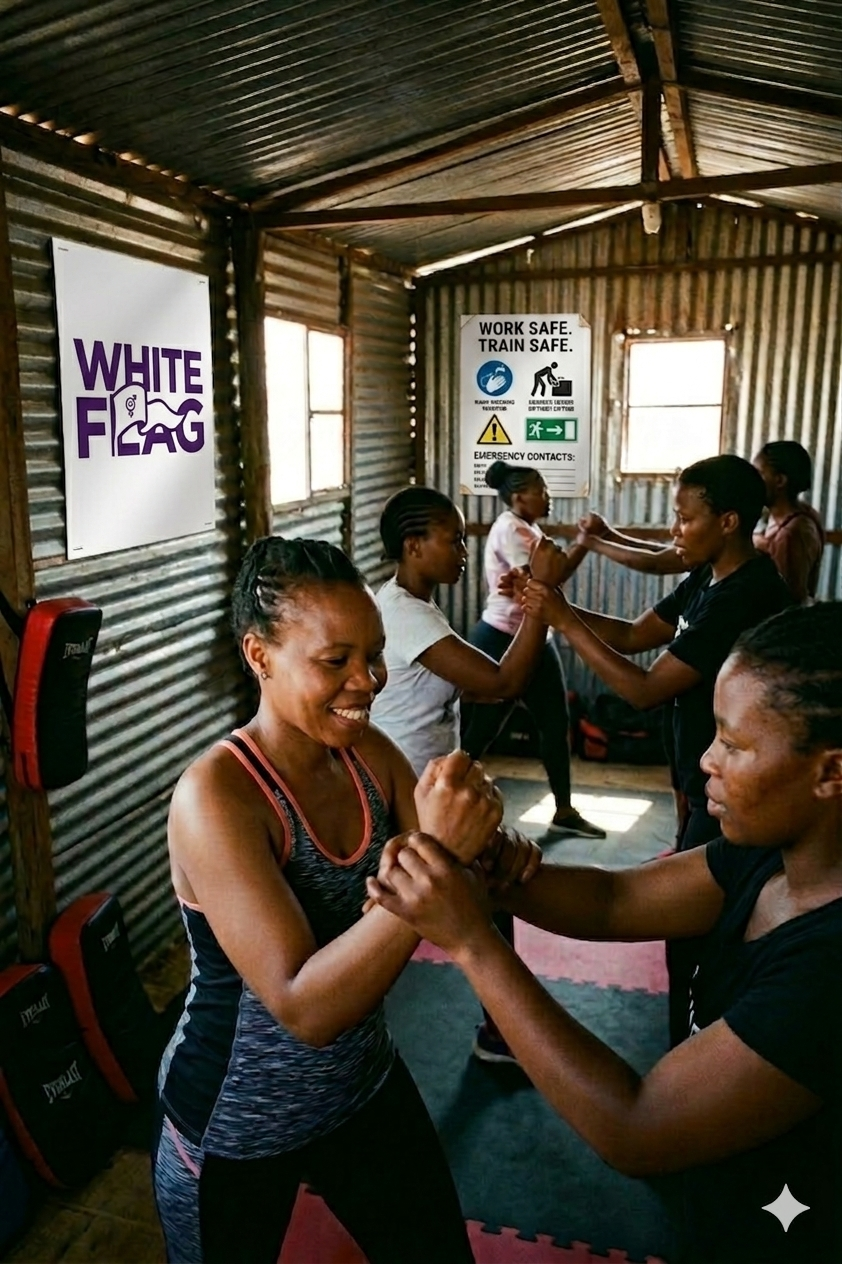
Importantly, self-defence is not about placing responsibility on potential victims, but about providing practical tools that can interrupt violence in real time while broader societal change continues to unfold. The White Flag programme recognises that ending violence requires both systemic transformation and immediate, life-preserving interventions. As such, it incorporates the provision of self-defence and life preservation skills through structured, interactive workshops delivered in schools and across communities.
These workshops are designed to be accessible, culturally relevant, and practical, ensuring that participants can apply what they learn in real-world situations. Key components of the workshops include rape avoidance training, self-defence techniques, and strategies for safe-proofing the home. Participants are also equipped with street-smart skills, including situational awareness and safe dating practices, enabling them to navigate both public and private spaces with greater confidence and security.
To ensure wide reach and sustained impact, these skills are further amplified through social networking platforms, cellular messaging, dedicated websites, and traditional media channels such as radio, television, and print.
This multi-platform approach ensures that knowledge is continuously reinforced and accessible beyond the workshop environment.
By combining education, practical skills, and broad-based dissemination, the White Flag programme empowers women and girls with the tools to protect themselves, while fostering a culture of vigilance, care, and collective responsibility within communities.
Help us building a new Shelter.
Lorem ipsum dolor sit amet, consectetuer adipiscing elit. Aenean commodo ligula eget dolor. Lorem ipsum dolor sit amet, consectetuer adipiscing elit leget dolor. Lorem ipsum dolor sit amet, consectetuer adipiscing elit. Aenean commodo ligula eget dolor. Lorem ipsum dolor sit amet, consectetuer adipiscing elit dolor consectetuer adipiscing elit leget dolor. Lorem elit saget ipsum dolor sit amet, consectetuer.
Beyond physical techniques, self-defence equips individuals with awareness, confidence, and the ability to assess and respond to risk. It shifts women and girls from a position of vulnerability to one of preparedness, enabling them to recognise danger early, assert boundaries, and act decisively to preserve their safety.
Importantly, self-defence is not about placing responsibility on potential victims, but about providing practical tools that can interrupt violence in real time while broader societal change continues to unfold. The White Flag programme recognises that ending violence requires both systemic transformation and immediate, life-preserving interventions. As such, it incorporates the provision of self-defence and life preservation skills through structured, interactive workshops delivered in schools and across communities.
These workshops are designed to be accessible, culturally relevant, and practical, ensuring that participants can apply what they learn in real-world situations. Key components of the workshops include rape avoidance training, self-defence techniques, and strategies for safe-proofing the home. Participants are also equipped with street-smart skills, including situational awareness and safe dating practices, enabling them to navigate both public and private spaces with greater confidence and security.
To ensure wide reach and sustained impact, these skills are further amplified through social networking platforms, cellular messaging, dedicated websites, and traditional media channels such as radio, television, and print.
This multi-platform approach ensures that knowledge is continuously reinforced and accessible beyond the workshop environment.
By combining education, practical skills, and broad-based dissemination, the White Flag programme empowers women and girls with the tools to protect themselves, while fostering a culture of vigilance, care, and collective responsibility within communities.